

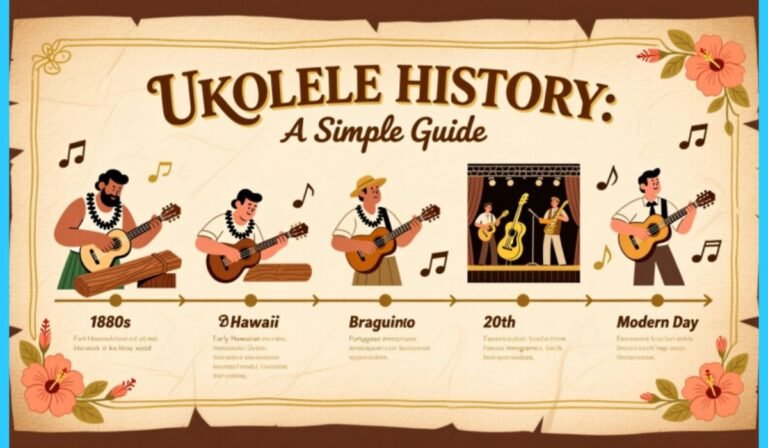
The story of the ukulele is one of travel, creativity, and cultural connection. While the instrument is small and light, its influence stretches across continents and generations. Understanding ukulele history helps explain why this cheerful four-string instrument continues to win hearts worldwide. From Portuguese roots to Hawaiian traditions, from early radio days to modern YouTube fame, the ukulele has experienced many rises, falls, and revivals. This guide walks you through that journey in a simple, friendly way, giving you a complete understanding of how the ukulele became the instrument we know today.
Quick Bio Information
Ukulele Origin: Madeira, Portugal
Arrival Year In Hawaii: 1879
Hawaiian Wood Commonly Used: Koa
Major Early Influence: King Kalākaua
First Big Popularity Spike: 1915 Exposition
Famous Early Player: Cliff Edwards
Mid-Century Promoter: Arthur Godfrey
Modern Revival Artist: Jake Shimabukuro
Global Modern Trend: Online tutorials
Common Ukulele Types: Soprano, Concert, Tenor
Cultural Symbol Region: Hawaii
Portuguese Beginnings
Ukulele history begins in the late nineteenth century, far from the beaches of Hawaii. In 1879, immigrants from Madeira, Portugal, arrived in Honolulu carrying small wooden instruments called machetes or braguinhas. These instruments produced a sweet, bright sound that caught the attention of local Hawaiians immediately. Although the machete and the ukulele are not identical, they share the same spirit: compact shape, four strings, and a lively tone. Portuguese craftsmanship blended with Hawaiian creativity, forming the first version of what would soon become a cultural symbol.
Hawaii Embraces The Ukulele
Once the machete reached Hawaii, skilled local woodworkers started refining it. They used local koa wood, which gave the ukulele its warm and distinctive tone. The Hawaiian royal family also supported the instrument. King Kalākaua especially encouraged music and dance, making the ukulele an important part of Hawaiian celebrations and performances. During this period, the name “ukulele” became widely used. While its translation is often debated, many believe it means “jumping flea,” possibly describing how quickly the player’s fingers moved across the strings. This early Hawaiian chapter established the ukulele as more than an instrument—it became part of the island’s identity.
Early Growth Toward America
By the early 1900s, ukulele production in Hawaii increased rapidly, with hundreds made every month. Tourists visiting the islands were enchanted by the instrument’s sound and charm. Musicians traveling between Hawaii and the mainland United States also carried the ukulele with them, performing in theaters, hotels, and gatherings. This period helped the ukulele reach American audiences even before it became a nationwide trend. Hawaiian-inspired music grew in popularity, creating a foundation for future waves of ukulele interest.
The 1915 Ukulele Boom
A major turning point in ukulele history came at the 1915 Pan-Pacific International Exposition in San Francisco. At this world’s fair, the Hawaiian Pavilion presented hula dancers, musicians, and ukuleles to massive crowds. The instrument captured the imagination of visitors, sparking an immediate and widespread craze. Sheet music publishers quickly took advantage of the trend, producing lesson books and popular songs arranged for ukulele. Radio broadcasts and phonograph recordings spread the sound even further. For many Americans, this was the moment the ukulele became an accessible, joyful part of everyday life.
Hollywood And The Jazz Era
Throughout the 1920s and early 1930s, the ukulele appeared everywhere—from college campuses to Hollywood films. Musicians like Cliff Edwards, Roy Smeck, and May Singhi Breen brought the instrument to concerts, stage shows, and early sound movies. Their performances highlighted the ukulele’s versatility and charm. At the same time, the jazz era introduced new rhythms and styles that blended well with the instrument. Yet, by the late 1930s, larger and louder instruments such as the guitar began to overshadow the ukulele, and comedic portrayals sometimes led people to see it as a novelty rather than a serious instrument.
War, Television, And Another Revival
During the 1940s, the ukulele found new life through entertainers like George Formby, who performed for troops during World War II. American soldiers stationed in the Pacific also brought ukuleles home as souvenirs, renewing interest across the United States. In the 1950s, the rise of television created another wave of popularity. TV host Arthur Godfrey often played the ukulele on air, inspiring millions of viewers. Manufacturers produced affordable plastic models, allowing almost anyone to own one. For a time, the ukulele became a household favorite.
The Rock Era And The Decline
By the mid-1950s, however, rock ’n’ roll reshaped musical preferences. Electric guitars dominated stages, radio shows, and record sales. The ukulele, with its softer and more gentle tone, struggled to compete in this new, louder era. Although artists like Tiny Tim kept the instrument visible through unusual and humorous performances, these portrayals sometimes reinforced the idea that the ukulele was mainly a comedic or quirky instrument. Despite this, small communities of dedicated players continued to keep the tradition alive.
Punk, Internet Culture, And The Unexpected Comeback
The late twentieth century brought surprising twists in ukulele history. In the 1980s, underground musicians and punk performers rediscovered the instrument, using it in creative and unconventional ways. What started as a novelty became a new form of expression, helping steer the instrument away from stereotypes. In the 1990s, the growing internet allowed enthusiasts to connect globally, sharing techniques, music, and building clubs. The real breakthrough came in 2005, when online video platforms appeared. A famous performance of “While My Guitar Gently Weeps” by Jake Shimabukuro went viral, showing the ukulele as a powerful and expressive instrument. This moment introduced millions of people to a modern, skilled ukulele style.
The Modern Ukulele Community
By the 2010s and into the 2020s, ukulele sales soared worldwide. Schools adopted it because it is affordable and simple for beginners. Social media platforms filled with ukulele tutorials, covers, and performances from players of all ages. Artists across genres began using ukuleles in popular songs, proving it could blend with modern music as easily as traditional Hawaiian tunes. Ukulele festivals, workshops, and orchestras emerged globally, turning the instrument into a widespread cultural phenomenon once again. Today, the ukulele is not only a musical tool but also a symbol of creativity, community, and accessibility.
Why The Ukulele Stays Popular
The ongoing popularity of the ukulele is the result of many qualities: its friendly size, its warm sound, and its welcoming learning curve. People often choose the ukulele because it feels unintimidating, even for complete beginners. Despite its simplicity, skilled players can create complex, beautiful music with remarkable expression. Ukulele history shows that the instrument continues to reinvent itself, adapting to each era while staying true to its joyful roots. Whether used for traditional Hawaiian songs, pop covers, or advanced solo pieces, the ukulele remains a universal symbol of musical freedom.
Final Thoughts
Ukulele history is a story shaped by travel, culture, and countless musicians who believed in the power of a small instrument. From Portuguese immigrants to Hawaiian royalty, from vaudeville stars to modern internet artists, every generation has discovered something special in the ukulele. Its journey from island traditions to global recognition shows how music can connect people across time and place. As the instrument continues to grow in popularity, the ukulele remains as meaningful as ever—simple, expressive, and full of life.
FAQs About Ukulele History
What Is The Origin Of The Ukulele?
The ukulele originated from Portuguese instruments brought to Hawaii in the late nineteenth century. Local craftsmen adapted the design and created a new instrument with a bright, distinctive sound.
Why Did Hawaii Play Such A Big Role In Ukulele History?
Hawaiian musicians, craftsmen, and even royalty supported the instrument early on. Their refinements and enthusiasm helped the ukulele become a key part of Hawaiian culture and identity.
When Did The Ukulele First Become Popular In America?
The ukulele became widely popular in the United States after the 1915 Pan-Pacific International Exposition, where Hawaiian performers introduced it to large crowds.
How Did The Ukulele Spread Globally?
Travel, radio, movies, television, and eventually the internet helped the ukulele reach audiences around the world. Each era introduced the instrument to new generations of listeners and players.
Why Did The Ukulele Decline During The Rock Era?
Electric guitars dominated the music scene during the rise of rock ’n’ roll. The ukulele, with its softer tone, could not compete with louder instruments featured in popular music at that time.
What Caused The Modern Ukulele Revival?
Online video platforms and social media played a major role in the modern revival. Viral performances and easy access to tutorials inspired millions to learn and share ukulele music.
Is The Ukulele Still Growing In Popularity Today?
Yes. The ukulele remains popular due to its affordability, ease of learning, and wide presence in music education and online culture. Its community continues to grow worldwide.
People Also Read: How to Watch Disney+ With Friends – Complete Guide
