

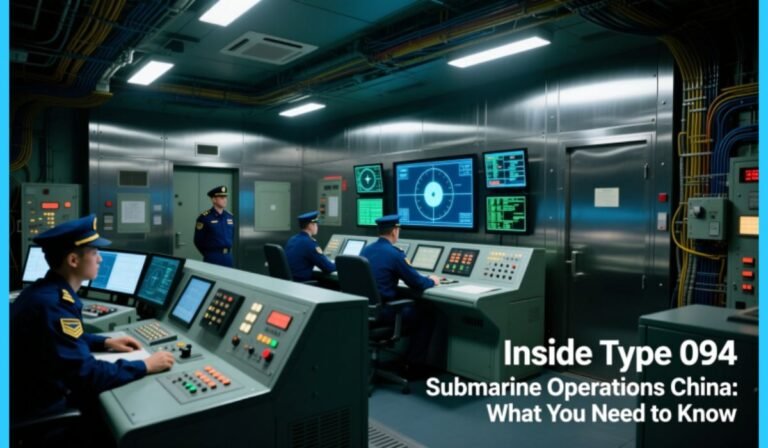
Introduction: Understanding China’s Type 094 Submarine
China’s Naval Ambitions Have Evolved Dramatically Over The Past Few Decades. At The Heart Of This Expansion Is The Type 094 Submarine, Also Known As The Jin-Class, Which Plays A Central Role In Beijing’s Strategic Nuclear Deterrence. These Nuclear-Powered Ballistic Missile Submarines Represent A Significant Step Up From Earlier Models, Offering China A Sea-Based Nuclear Capability That Can Reach Key U.S. Territories. Understanding Type 094 Submarine Operations China Provides Insight Into How Beijing Projects Power Underwater And Ensures Its Place In The Global Nuclear Landscape. This Article Explores Everything From Design And Armament To Operational Challenges And Future Upgrades.
Quick Bio Information
Type 094 Submarine Operations China Are Shaped By A Range Of Critical Details:
Nuclear-Powered Ballistic Missile Submarine Designed For Strategic Deterrence.
Replaced The Unreliable Xia-Class Submarines.
Hull Design Influenced By Soviet Delta III Class.
Equipped With 12 JL-2 SLBMs, Some Upgraded To JL-3 Missiles.
JL-2 Range: Approximately 9,000 Km; JL-3 Range: Up To 12,000 Km.
Crew Trained For Extended Patrols And Complex Nuclear Operations.
High Noise Levels Reduce Stealth Compared To U.S. And Russian Counterparts.
Regularly Deployed On Deterrence Patrols In South China Sea And Beyond.
Warheads Typically Kept Separate From Missiles In Peacetime.
Type 096 Submarine Planned To Improve Stealth, Range, And Operational Flexibility.
The Evolution Of China’s Ballistic Missile Submarines
China’s Journey Into Ballistic Missile Submarines Began With The Xia-Class, Or Type 092, Introduced In 1983. While It Marked China’s First Attempt At A Sea-Based Nuclear Force, The Xia-Class Faced Numerous Issues, Including Reactor Reliability Problems, High Noise Levels, And Limited Missile Capability. These Limitations Prompted China To Develop The Type 094, Designed To Overcome Past Shortcomings. The Jin-Class Submarines Reflect A Broader Effort To Modernize China’s Navy, Enhance Strategic Deterrence, And Achieve Greater Global Influence. Analysts Consider The Type 094 A Milestone In China’s Ambition To Build A Credible Second-Strike Capability.
Design And Specifications Of The Type 094
The Type 094 Submarine Features A Sleek, Nuclear-Powered Hull With Design Elements Possibly Influenced By The Soviet Delta III Class. It Is Smaller Than Its Russian Counterparts But Optimized For Ballistic Missile Deployment. Each Submarine Houses A Crew Trained For Extended Patrols, With Advanced Navigation Systems And State-Of-The-Art Electronics. The Jin-Class Was Designed For Extended Missions Far From Chinese Shores, Allowing China To Project Its Power While Maintaining Stealth. Despite These Advances, Experts Note That The Submarine Remains Louder Than U.S. And Russian Models, Which Affects Its Operational Effectiveness.
Missile Arsenal: JL-2 And JL-3 Capabilities
At The Core Of Type 094 Submarine Operations China Is Its Missile Arsenal. The Standard Armament Consists Of 12 JL-2 Submarine-Launched Ballistic Missiles, Each Capable Of Carrying A Single Nuclear Warhead. With A Range Of Approximately 9,000 Kilometers, These Missiles Can Threaten U.S. Territories Such As Hawaii, Guam, And Alaska. Some Submarines Have Been Upgraded With JL-3 Missiles, Extending The Range To Around 12,000 Kilometers, Which Could Potentially Target The Continental United States From Waters Closer To China. The Missile Systems Are Equipped With Modern Guidance Technology, Enhancing Accuracy And Strategic Reliability.
Operational Role In China’s Nuclear Deterrence
Type 094 Submarine Operations China Are Integral To Beijing’s Nuclear Strategy. These Submarines Serve As A Sea-Based Deterrent, Ensuring China Can Respond To Nuclear Threats Even If Land-Based Forces Are Compromised. In Peacetime, Chinese Doctrine Keeps Warheads Separate From Missiles, Limiting Operational Risks But Also Restricting Immediate Deterrence Potential. Submarine Crews Follow Strict Protocols To Maintain Safety And Security, While National Command Systems Ensure That Nuclear Weapons Can Be Deployed Reliably If Needed. The Jin-Class Submarines Embody China’s Focus On Maintaining A Credible, Flexible, And Secure Nuclear Deterrent.
Detectability And Technical Challenges
While The Type 094 Represents Significant Advancement, It Faces Technical Limitations. Chief Among Them Is High Acoustic Signature, With Noise Levels Estimated Around 120 Decibels. This Makes The Submarines Easier To Detect Compared To Quieter U.S. And Russian SSBNs. Detectability Challenges Are Amplified Because Type 094s Must Operate Far From Chinese Shores To Threaten Distant Targets. The Submarine’s Size And Propulsion Design Contribute To Its Noise, Reducing Its Effectiveness As A Stealthy Second-Strike Platform. These Limitations Highlight The Challenges China Faces In Balancing Missile Capability With Operational Security.
Patrols And Deployment Patterns
Type 094 Submarines Are Routinely Deployed On Nuclear Deterrence Patrols, Particularly In The South China Sea. These Patrols Ensure A Continuous Underwater Presence, Projecting Power And Serving As A Visible Reminder Of China’s Strategic Reach. Submarines Travel Extended Distances While Remaining Submerged, Testing Crew Endurance And The Reliability Of Systems. Deployment Patterns Are Carefully Planned To Maintain Strategic Flexibility, Avoid Detection, And Demonstrate Operational Readiness. Despite Operational Limitations, These Patrols Reinforce China’s Commitment To Its Sea-Based Nuclear Forces.
Command, Control, And Safety Protocols
The Success Of Type 094 Submarine Operations China Depends On Robust Command And Control Structures. Nuclear Weapons Onboard Are Managed Through Secure Channels To Prevent Accidental Launches. Crews Undergo Intensive Training To Operate Weapons Safely And Follow Protocols For Communication With National Command Authorities. Command And Control Challenges Are Heightened By The Complexity Of Submarine Operations, The Need For Reliable Communication At Sea, And The Strategic Importance Of These Vessels. China’s Approach Balances Safety, Security, And Operational Effectiveness To Maintain Credibility Without Compromising Crew Or National Safety.
Comparison With Other Submarine Classes
When Compared With Other Submarines, The Type 094 Offers Notable Advancements Over The Xia-Class But Falls Short Of The More Advanced Type 096, Which Is Under Development. U.S. Ohio-Class And Russian Delta III Submarines Typically Exhibit Greater Stealth And Longer-Range Missiles, Highlighting The Jin-Class Limitations. Despite These Challenges, The Type 094 Provides China With A Flexible, Mobile Nuclear Deterrent. By Understanding How The Jin-Class Fits Into The Global Submarine Landscape, Analysts Can Better Assess China’s Strategic Capabilities And The Future Of Sea-Based Nuclear Forces.
The Future Of China’s Submarine Fleet
China Is Developing The Type 096 Submarine To Address Limitations In Noise, Range, And Operational Flexibility. These Next-Generation SSBNs Are Expected To Be Quieter, More Capable, And Better Equipped To Serve As A Reliable Global Deterrent. The Future Fleet Will Likely Include More Advanced Missiles, Extended Patrol Capabilities, And Enhanced Command Systems. As Technology Advances And China Expands Its Naval Presence, The Role Of Type 094 Submarines May Shift Toward Transitional Operations While Preparing For Full Integration Of The Type 096 Into Strategic Deterrence.
Key Takeaways: What The Type 094 Means For Global Security
Type 094 Submarine Operations China Highlight The Balance Between Capability And Limitation. While The Jin-Class Offers China A Credible Sea-Based Nuclear Force, Noise Levels, Operational Doctrine, And Missile Limitations Constrain Its Strategic Impact. These Submarines Reflect China’s Growing Military Ambitions And Ongoing Investment In Technological Advancements. Understanding Their Role Provides Insight Into Regional Security Dynamics, Global Deterrence Strategy, And How China Plans To Protect Its Interests Through Submarine-Based Nuclear Forces.
Final Thoughts
The Type 094 Submarine Represents A Critical Component Of China’s Strategic Nuclear Force, Demonstrating Significant Advances Over Earlier Classes While Highlighting Areas For Improvement. Understanding Type 094 Submarine Operations China Offers Insight Into How Beijing Balances Deterrence, Operational Limitations, And Global Strategic Ambitions. As China Expands Its Fleet And Introduces Next-Generation Submarines, The Role Of The Jin-Class Will Remain Vital In Shaping Regional Security, Nuclear Strategy, And The Future Of Underwater Warfare.
FAQs About Type 094 Submarine Operations China
What Is The Primary Role Of The Type 094 Submarine?
The Primary Role Is To Serve As A Sea-Based Nuclear Deterrent, Ensuring China Can Respond To Nuclear Threats Even If Land-Based Forces Are Compromised.
How Many Missiles Can A Type 094 Carry?
It Can Carry Up To 12 Submarine-Launched Ballistic Missiles, Typically JL-2, With Some Upgraded To Longer-Range JL-3 Missiles.
Can Type 094 Submarines Reach The U.S. Mainland?
Standard JL-2 Missiles Cannot Reach The Continental U.S. From Near China, But JL-3 Upgrades Extend The Range To Potentially Target U.S. Mainland Locations.
Why Are Type 094 Submarines Considered Noisy?
Due To Hull Design And Propulsion Systems, Type 094 Submarines Have High Acoustic Signatures, Making Them Easier To Detect Compared To Quieter U.S. And Russian Submarines.
Where Are Type 094 Submarines Typically Deployed?
They Are Routinely Deployed In The South China Sea And Other Strategic Waters For Deterrence Patrols.
What Limitations Affect Operational Readiness?
High Noise Levels, Separation Of Warheads From Missiles In Peacetime, And Command And Control Challenges Reduce Operational Readiness.
What Is Next For China’s Submarine Fleet?
The Type 096 Is Under Development, Promising Enhanced Stealth, Longer-Range Missiles, And Improved Nuclear Deterrence Capabilities.
People Also Read: Calculus Concepts Explained: A Friendly Guide for Students
