

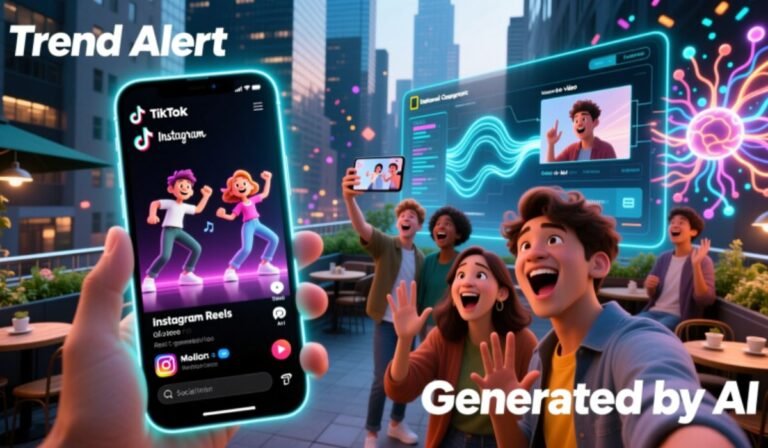
Social media trends evolve faster than ever, especially on TikTok and Instagram, where new visual styles emerge daily and creators compete to capture audience attention in seconds. With algorithms heavily favoring engaging video content, creators are constantly searching for ways to produce more videos while keeping quality high. This pressure has opened the door for a new creative force: image-to-video AI.
By converting simple images into dynamic, scroll stopping videos, AI tools are changing how creators participate in trends, tell stories, and showcase their personalities or brands. What once required complex filming now takes only a few clicks. As a result, many of TikTok and Instagram’s biggest trends today are powered not by traditional video production, but by AI generated motion.
Why is image-to-video AI becoming so popular on short form platforms?
Image-to-video AI is becoming popular because it removes the biggest barriers to consistent video creation: time, skill, and filming conditions.
TikTok and Instagram reward frequent posting. According to Later, creators who post at least four times a week increase their reach by nearly 30 percent. But filming daily can be exhausting, especially for solo creators. Lighting varies, recording takes time, and editing requires effort. With image-to-video tools, a creator can repurpose selfies, drawings, product photos, or past content without needing to record anything new.
Short form platforms are also visually driven. Movement captures attention faster than static visuals, and AI helps transform ordinary images into videos with motion, emotion, and cinematic flair. For creators chasing virality, this represents a major advantage.
Additionally, AI responds well to the fast paced nature of trends. A creator can generate a video that fits a trending sound or effect in minutes, rather than hours. This agility is key in platforms where trends can peak and fade within 48 hours.
How does image-to-video AI help creators join trends faster?
Image-to-video AI helps creators join trends faster by eliminating the slower parts of content production and allowing them to generate videos instantly.
Most TikTok and Instagram trends are tied to:
- Audio clips
• Memes
• Reaction formats
• Dance movements
• Visual transitions
Traditionally, creators would need to film themselves performing the trend. AI removes that step entirely. Instead, a single photo can be animated to match the tone or movement of the trend. This saves creators from performing choreography, filming themselves repeatedly, or editing complicated transitions.
AI also allows creators to revise quickly. If a trend requires a specific timing or gesture, the creator can simply regenerate a version until it fits perfectly. This speed lowers the creative barrier to entry and increases participation.
In the middle of this shift, many creators rely on an ai video generator from image by Viggle AI to turn standard images into motion rich videos that follow popular trends without requiring on camera presence.
Which TikTok and Instagram trends are most influenced by image-to-video AI?
Several major categories of trends are now heavily shaped by image-to-video AI.
- Animated selfies and portraits
Creators animate photos of themselves to follow trending audio or mimic expressive gestures. These videos feel personal yet stylized, making them highly engaging. - Dance trends without dancing
Instead of performing a dance challenge, creators animate a selfie or character to move in sync with the choreography. - Character and avatar trends
AI powered avatars, anime styled characters, and digital alter egos are increasingly common in reels and TikToks. They allow creators to participate anonymously or creatively. - Meme reenactments
Static memes become animated reactions through AI, allowing creators to bring classic internet images to life. - Product and brand trends
Businesses turn product photos into stylish promotional videos that fit trending formats on Instagram Reels or TikTok ads. - Before and after transformations
AI motion effects create dramatic reveals or transitions using only two images.
These trends succeed because they feel fresh, playful, and accessible to a wide creator base.
Why do AI powered videos perform so well in social algorithms?
AI powered videos perform well because they hit the exact engagement triggers TikTok and Instagram algorithms reward.
Algorithms prioritize:
- Watch time
• Completion rate
• Replays
• Shares
• Saves
• Quick visual hooks
AI generated videos often contain surprising or unusual motion that stops users mid scroll. When viewers pause to understand what they are seeing, watch time increases. Many AI animations also create a looping effect, which encourages repeated viewing. This boosts performance further.
According to TikTok’s own data, videos that contain unexpected visual movement see up to 1.7 times higher engagement. AI powered animations deliver this naturally because they take familiar images and reimagine them in surprising ways.
AI videos also tend to be short and tightly constructed, which helps completion rate. A viewer is more likely to finish an 8 second AI animation than a 25 second traditionally filmed clip.
How are creators using AI to build their personal brands on social media?
Creators are using AI in strategic ways to differentiate themselves and maintain a cohesive identity.
Some use AI to create signature visual styles. For example, a creator may animate their avatar for every video, creating instant brand recognition. Others use image-to-video AI to reinforce aesthetics like minimalism, surrealism, cyberpunk, or vintage styles.
AI also helps creators maintain consistency across multiple platforms. A single animated image can be repurposed for TikTok, Instagram Reels, YouTube Shorts, Pinterest Idea Pins, or even LinkedIn promotional posts.
Additionally, creators build storytelling series using AI. Instead of filming new clips each time, they animate the same image repeatedly, creating continuity for viewers while reducing production demands.
This kind of brand identity would be nearly impossible to maintain with traditional filming, but AI makes it scalable and sustainable.
What opportunities does image-to-video AI create for brands and businesses?
Brands and businesses benefit from AI image-to-video because they can turn product photos or marketing images into attention grabbing ads quickly and affordably.
Small businesses in particular gain from:
- Faster video ad production
• Lower production costs
• More variations for A/B testing
• Ability to follow trends without filming
• Higher engagement with moving visuals
For ecommerce brands, product animations increase click through rate because customers get a better sense of texture, scale, and design. On TikTok Shop and Instagram Shop, video based listings outperform static images significantly.
Larger brands use AI to generate trend responsive content without disrupting larger production cycles. When a new audio goes viral, a brand can animate a product image and publish a relevant video within hours.
As short form platforms become more shoppable, the ability to generate quick, engaging product videos becomes a major competitive advantage.
Conclusion
Image-to-video AI is reshaping the creative landscape on TikTok and Instagram by making video production faster, more accessible, and more imaginative. Creators no longer need perfect lighting, filming skills, or on camera confidence to participate in the latest trends. Brands no longer need full scale shoots to generate compelling ad content. With a single image, anyone can produce motion rich videos that perform well in social algorithms and resonate with audiences. As AI continues to evolve, it will play an even greater role in driving the next wave of visual trends on short form platforms.
