

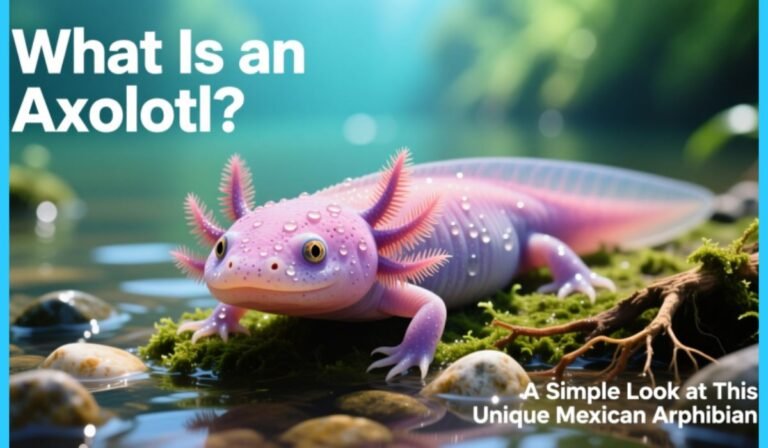
The Axolotl is one of the most fascinating creatures on Earth, a gentle-looking amphibian that has captured the attention of scientists, pet owners, and nature lovers around the world. With its soft smile, feathery gills, and almost mythical ability to regrow lost body parts, the Axolotl stands out as a true natural wonder. What makes it even more remarkable is that unlike most amphibians, the Axolotl never grows out of its youthful, water-dwelling stage. Instead, it remains in its juvenile form for life while still becoming a fully functioning adult. This simple and friendly introduction sets the stage for a deeper look at this extraordinary species whose roots lie in the ancient waters of Mexico.
Quick Bio Information
Axolotl Scientific Name: Ambystoma Mexicanum
Habitat: Xochimilco Canals, Mexico City
Origin: Central Mexico
Lifespan: Ten To Fifteen Years
Size: Up To Thirty Centimeters
Diet: Worms, Larvae, Crustaceans, Small Fish
Color Forms: Wild Type, Albino, Leucistic, Golden, Melanoid
Development Type: Neoteny (No Metamorphosis)
Conservation Status: Critically Endangered
Special Ability: Limb And Organ Regeneration
Cultural Significance: Linked To Aztec God Xolotl
What Is An Axolotl? A Clear And Simple Definition
An Axolotl is a type of salamander scientifically known as Ambystoma Mexicanum. Although it belongs to the same family as land-dwelling salamanders, the Axolotl is completely different in the way it develops. Instead of undergoing metamorphosis and becoming a land animal, it spends its entire life in the water. This unique trait makes the Axolotl a rare example of an amphibian that reaches adulthood without losing the characteristics of its larval stage. With its wide head, lidless eyes, and delicate gills floating on each side of its face, the Axolotl has a distinctive appearance that combines charm and curiosity. Its personality is just as gentle, making it a favorite in many homes and research facilities.
The Science Behind Why Axolotls Never Grow Up
The Axolotl’s unusual development is the result of a biological phenomenon called Neoteny. Neoteny means that an animal becomes sexually mature while still keeping features that normally disappear in adulthood. In most salamanders, the shift from water to land is triggered by hormones that transform the body. But in the Axolotl, this process never naturally begins. Scientists believe this happened because the ancient environment of the Axolotl made life in the water more reliable than life on land. Over thousands of years, the species adapted by keeping its aquatic traits. Although forced metamorphosis is technically possible with the help of iodine, it is risky, stressful, and not recommended. Modern research shows that Axolotls thrive best when allowed to remain exactly the way nature designed them.
What Axolotls Look Like And How To Recognize Them
The appearance of an Axolotl is one of the reasons it has become so widely adored. Its most famous feature is the set of feathery external gills that spread out from the sides of its head like soft branches. These gills move gently in the water and help the Axolotl breathe. Its body is smooth, its tail is long and flat for easy swimming, and its face appears to be smiling, giving it a friendly charm. In the wild, most Axolotls have a brownish-gray color with darker spots, helping them blend into their lakebed homes. Captive Axolotls, however, come in many color variations such as Pink (Leucistic), Golden, Black, and Albino. These color forms have been selectively bred over generations and are part of what makes them so popular today.
Where Axolotls Live In The Wild
The Axolotl is native to a very specific region in Mexico, particularly the waterways of southern Mexico City. Historically, Axolotls lived in two lakes: Lake Xochimilco and Lake Chalco. Over time, Lake Chalco was almost completely drained to protect the city from flooding, leaving Lake Xochimilco as the final natural home for this species. Today, the Axolotl survives mainly in the canals and wetland fragments of this historic lake system. These waters used to be clear, cool, and rich with plants, but modern urban development has dramatically changed the landscape. Pollution, reduced water flow, and invasive fish have all made it difficult for Axolotls to survive. Despite this, efforts continue to restore their home and protect what remains of their habitat.
What Axolotls Eat In Their Natural Habitat
An Axolotl is a skilled hunter, although its approach is slow and calm. It eats a wide variety of aquatic prey, including small worms, insect larvae, mollusks, crustaceans, and tiny fish. In the lake ecosystem, the Axolotl acts as a top predator, meaning it helps keep the balance of other species in check. Its method of eating involves creating a small vacuum by snapping its mouth open and quickly sucking in its food. In captivity, Axolotls eat a similar diet but often rely on safe and manageable foods such as bloodworms, brine shrimp, pellets, or earthworms. Their flexible diet and gentle feeding style make them easy to care for, but it is still important to provide clean water and proper nutrition to keep them healthy.
Lifespan, Size, And Growth Of The Axolotl
Axolotls have a fairly long lifespan for an amphibian. In the wild, they typically live around ten to fifteen years, although the exact number can vary depending on water conditions and food availability. In captivity, where they receive stable care, some Axolotls can even live longer. They reach sexual maturity at about one year of age, even though they continue to look like juveniles. A fully grown Axolotl can reach up to thirty centimeters in length, although most individuals are slightly smaller. Their bodies remain soft and flexible, and their tails remain a key part of how they swim and move around their environment. This combination of slow growth, gentle development, and youthful appearance adds to their charm and uniqueness.
The Regeneration Superpower Of The Axolotl
If there is one thing the Axolotl is globally famous for, it is its incredible ability to regenerate. Axolotls can regrow lost limbs, repair damaged organs, and even restore parts of their spinal cord or brain. This remarkable ability has made them the focus of scientific research for decades. Scientists are working to understand how the Axolotl activates genes that allow healing to happen so quickly and completely. Some studies suggest that Axolotls maintain developmental genes that other animals shut down as they mature. This means their bodies stay in a youthful state where regeneration is easier. While scientists are still far from using this knowledge for human medicine, the Axolotl continues to offer exciting clues about the potential for advanced healing in the future.
The Conservation Crisis Facing Wild Axolotls
Despite their popularity, wild Axolotls are in serious danger. They are listed as Critically Endangered due to shrinking habitat, pollution, and competition from invasive species such as carp and tilapia. These fish not only compete for food but also eat young Axolotls, making natural reproduction more difficult. Water quality issues from urban growth further reduce their survival chances. Although there are thousands of Axolotls in captivity, many are genetically related and lack the diversity found in wild populations. This makes captive groups vulnerable to disease and limits their usefulness for reintroduction programs. The sharp decline in wild numbers has sparked global concern, but it has also motivated strong conservation efforts in recent years.
Efforts To Protect And Restore The Axolotl Population
Scientists, conservation organizations, and the Mexican government have developed many programs to help the Axolotl recover. Habitat restoration is a major focus, especially in the Xochimilco canal system. Projects include building new artificial wetlands, restoring traditional agricultural islands called chinampas, improving water flow, and supporting local farming techniques that benefit both people and wildlife. In recent years, small groups of captive-bred Axolotls have been released into restored waterways to test their ability to survive. Community groups also participate by promoting educational programs and encouraging sustainable tourism. Although the journey is long, every effort brings the Axolotl one step closer to a more secure future.
The Cultural Importance Of The Axolotl In Mexico
The Axolotl is deeply tied to the cultural identity of Mexico. Its name comes from the Aztec god Xolotl, the deity of fire and lightning who, according to legend, transformed into an Axolotl to escape sacrifice. This ancient connection has kept the Axolotl present in local stories, traditions, and artwork. In 2021, its importance was recognized nationally when it was featured on the new fifty-peso banknote, celebrating both the creature and the country’s natural heritage. Today, the Axolotl is not only a scientific marvel but also a cultural symbol representing resilience, transformation, and the beauty of Mexico’s unique ecosystems.
Final Thoughts
The Axolotl is one of the most extraordinary animals in the world, combining biological uniqueness, cultural meaning, and scientific importance. Its youthful features, gentle nature, and powerful regenerative abilities have made it an icon of natural wonder. At the same time, its struggle for survival reminds us of how fragile ecosystems can be and how important conservation work is for the future. Learning about the Axolotl helps us appreciate not only the beauty of this rare Mexican amphibian but also the incredible diversity of life on our planet. With continued scientific effort, community support, and global awareness, the Axolotl has a chance to thrive once again in the waters it has called home for centuries.
FAQs About Axolotls
What Is An Axolotl Known For?
The Axolotl is best known for staying in its juvenile aquatic form and for its incredible ability to regenerate limbs, organs, and even parts of its brain and spinal cord.
Where Do Axolotls Come From?
Axolotls are native to Mexico, specifically the lake systems surrounding Xochimilco in southern Mexico City. This is the only natural home of the species.
How Long Do Axolotls Live?
Most Axolotls live for ten to fifteen years, but with proper care and stable conditions, some can live even longer in captivity.
Why Are Axolotls Endangered?
They are endangered due to habitat loss, pollution, invasive fish, and urban development. These pressures have greatly reduced the number of wild Axolotls.
Can Axolotls Breathe Air?
Axolotls mainly breathe through their external gills and skin, but they also develop simple lungs that allow them to take occasional gulps of air at the surface.
Do Axolotls Make Good Pets?
Axolotls can be good pets if owners provide clean water, proper temperature, and a safe environment. They are calm, quiet, and interesting to observe.
Can Axolotls Metamorphose?
Axolotls can technically metamorphose with hormonal intervention, but it is dangerous, unnatural for them, and should not be attempted. They are healthiest when kept in their natural aquatic form.
People Also Read: What Is Sniffies? A Simple Guide To The Location-Based App Everyone’s Talking About
