

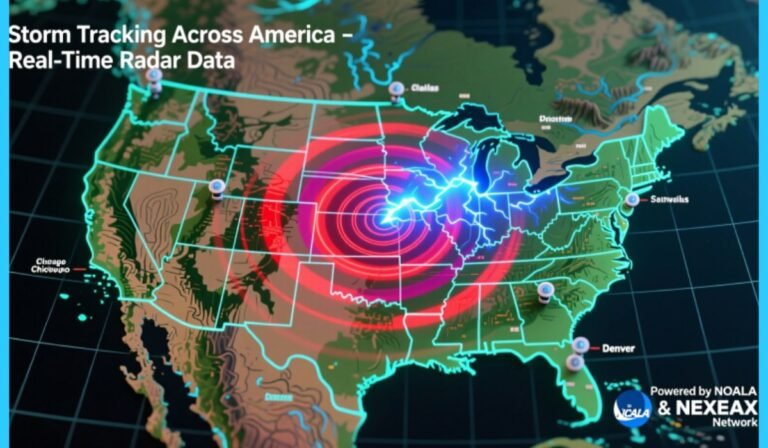
Introduction: Understanding Weather Radar In The USA
Weather Radar USA has become an essential tool in modern meteorology, helping Americans track storms, predict severe weather, and stay safe. From thunderstorms and tornadoes to hurricanes and snowstorms, radar technology allows meteorologists to see what’s happening in the skies in real-time. While weather forecasts are often taken for granted, behind every accurate prediction lies a complex network of radar systems, advanced technology, and expert interpretation.
In this article, we’ll explore how Weather Radar USA works, its history, types, modern innovations, and the many ways it helps people across the country. Whether you’re curious about how radar detects rain or how meteorologists predict tornadoes, this guide will give you a clear, in-depth understanding of the technology that watches over America’s skies.
Quick Bio Information
Weather Radar USA: Modern Technology Tracking Storms Across America
Radar Network: NEXRAD Over 160 Sites Nationwide
Radar Type: Pulse-Doppler And Dual-Polarization
Precipitation Detection: Rain, Snow, Sleet, Hail
Velocity Tracking: Detects Wind Patterns And Storm Rotation
Applications: Aviation, Media Alerts, Emergency Management, Research
Innovations: Phased-Array Radar, AI Forecasting, Space-Based Platforms
Limitations: Signal Attenuation, Earth Curvature, Doppler Dilemma
History: From WWII Military Radars To Modern NEXRAD
Meteorology Experts: David Atlas, J.S. Marshall, NSSL Team
The History Of Weather Radar In The United States
The journey of Weather Radar USA began during World War II, when military radars first detected rain instead of enemy aircraft. Meteorologists quickly realized the potential of radar to observe and track weather. By the 1950s, radar was being used to warn communities of severe storms, laying the groundwork for modern forecasting.
Significant milestones include the development of the WSR-57 radar and, later, the NEXRAD (WSR-88D) network in the 1980s, which brought nationwide coverage. Pioneers such as David Atlas and J.S. Marshall contributed to understanding precipitation patterns, while the National Severe Storms Laboratory advanced storm prediction capabilities. These efforts transformed Weather Radar USA from a simple observational tool into a critical safety system.
How Weather Radar Works: The Basics
At its core, Weather Radar USA works by sending out radio waves that bounce off precipitation in the atmosphere. When the waves return, radar systems calculate the location, intensity, and movement of rain, snow, or hail. Doppler radar adds another dimension, detecting motion within the storm to reveal rotation, wind speed, and storm structure.
In simple terms, radar “listens” to the sky. By measuring how signals return, meteorologists can determine whether a storm is moving toward or away from the radar, how intense it is, and even if tornadoes might form. This combination of detection and motion tracking makes radar an indispensable tool for storm warnings and forecasting.
Types Of Weather Radars In The USA
Weather Radar USA includes several types of radar, each with its unique advantages. Pulse-Doppler radar is the most widely used, offering both reflectivity and velocity measurements. Different frequency bands, such as S-band, C-band, and X-band, help optimize radar performance depending on weather conditions and range requirements.
Modern dual-polarization radars improve accuracy by sending waves both horizontally and vertically, allowing meteorologists to distinguish between rain, hail, or snow. Emerging phased-array radars scan faster and more precisely, enabling real-time tracking of rapidly changing storm systems. Together, these radar types form the backbone of America’s storm monitoring system.
Reading A Radar Display: Colors, Reflectivity, And Intensity
Understanding a radar image is easier than it seems once you know the basics. Radar displays use color to indicate precipitation intensity. Light green shows light rain, while yellow, orange, and red indicate increasingly heavier precipitation. Magenta often signals extreme hail or severe weather.
The dBZ scale measures reflectivity, which correlates with rain rate. High dBZ values usually indicate heavy rain or hail, while low values suggest light precipitation. Weather Radar USA also shows movement using velocity data, helping meteorologists identify rotating storms, gust fronts, and potential tornadoes.
Detecting Different Types Of Precipitation
Weather Radar USA can detect rain, snow, sleet, and hail by analyzing the shape, size, and movement of precipitation particles. Dual-polarization radar significantly enhances this ability, as horizontal and vertical signal measurements reveal particle shape.
For example, snowflakes scatter radar signals differently than raindrops, allowing meteorologists to map snowfall accurately. Hail creates strong reflectivity signatures, while sleet produces a mixture of rain and ice patterns. Combining radar data with surface reports ensures accurate and reliable precipitation forecasts.
Tracking Storm Motion And Wind Patterns
One of the most impressive features of Weather Radar USA is its ability to track storm motion and wind patterns. Doppler radar measures radial velocity, detecting whether air is moving toward or away from the radar. This information is crucial for identifying dangerous phenomena like mesocyclones and tornado formation.
By tracking storm rotation, meteorologists can issue timely tornado warnings and monitor wind shear, which influences severe thunderstorm development. This capability has saved countless lives by providing early alerts and allowing communities to take necessary precautions.
Weather Radar Networks Across The USA
The United States benefits from one of the most advanced radar networks in the world. The NEXRAD network, consisting of over 160 radar sites, provides near-complete coverage of the continental U.S. Each radar site continuously scans the sky, feeding data into national forecasting systems.
This network allows real-time monitoring of storms across states, enhancing coordination between local weather offices, emergency services, and media outlets. Weather Radar USA also collaborates with private companies and universities to improve storm tracking and climate research.
Modern Technology And Innovations In Storm Tracking
Weather Radar USA continues to evolve with technological innovations. Dual-polarization and phased-array radars have improved accuracy and speed, while AI and machine learning algorithms enhance storm detection and forecasting.
Space-based radar and private platforms provide additional perspectives, complementing ground-based networks. These advancements enable meteorologists to predict storm intensity, rainfall totals, and tornado potential with unprecedented precision, improving public safety and preparedness.
Applications Of Weather Radar
The applications of Weather Radar USA extend far beyond daily forecasts. In aviation, radar guides pilots safely through stormy conditions. Emergency management agencies use radar data for evacuation planning and disaster response. Television networks and weather apps provide real-time alerts to the public, helping people avoid dangerous conditions.
Meteorologists also use radar data for research, improving climate models and understanding extreme weather patterns. From everyday rainfall predictions to hurricane tracking, radar technology plays a critical role in saving lives and property.
Challenges And Limitations Of Weather Radar
While Weather Radar USA is highly effective, it has limitations. Radar signals weaken with distance, and the Earth’s curvature can create blind spots at long ranges. Signal attenuation in heavy precipitation may obscure storm details, and interpreting radar images requires expertise.
The Doppler dilemma also limits velocity and range accuracy, making precise measurements challenging under certain conditions. Despite these challenges, ongoing technological advancements continue to reduce limitations and improve radar reliability across the country.
The Future Of Weather Radar In The USA
Looking ahead, Weather Radar USA will continue to advance. Higher resolution radars, faster scanning capabilities, and AI-driven analysis promise more accurate and timely forecasts. Expanded networks and integration with climate models will enhance preparedness for extreme weather events.
Future innovations will not only improve safety but also provide valuable insights for agriculture, aviation, and environmental research. Weather Radar USA is poised to remain a critical tool for protecting lives and understanding America’s changing climate.
Conclusion: How Weather Radar Keeps America Safe
Weather Radar USA is more than just a tool for meteorologists—it is a lifeline for communities across the country. From detecting rain and snow to tracking tornadoes and hurricanes, radar technology informs critical decisions and protects lives. As technology continues to advance, radar will become even more precise, offering deeper insights into storms and extreme weather. By understanding how it works and appreciating its capabilities, we can better prepare for the unpredictable power of nature.
FAQs About Weather Radar USA
What Is Weather Radar USA Used For?
Weather Radar USA is used to track precipitation, monitor storm movement, detect wind patterns, and provide timely alerts for severe weather. It is essential for forecasting, aviation, and emergency management.
How Does Doppler Radar Work?
Doppler radar measures the speed and direction of precipitation and wind by detecting changes in frequency of returning radar signals. This helps meteorologists identify rotation in storms and predict tornado formation.
Can Weather Radar Detect Tornadoes?
Yes, Doppler radar can detect the rotation of mesocyclones within thunderstorms, which often precedes tornadoes. Radar data helps issue early warnings for communities at risk.
What Types Of Radar Are Used In The USA?
The U.S. uses pulse-Doppler radars, dual-polarization radars, phased-array radars, and different frequency bands such as S-band, C-band, and X-band for optimal coverage and accuracy.
Why Are Radar Colors Important?
Radar colors indicate precipitation intensity. Light green shows light rain, yellow and red indicate heavier rain, and magenta signals severe hail or extreme weather.
How Accurate Is Weather Radar USA?
Weather Radar USA is highly accurate for detecting storm location, precipitation type, and movement. However, accuracy may decrease due to signal attenuation, Earth curvature, or extreme conditions.
What Is The Future Of Weather Radar In The USA?
Future developments include faster scanning, higher resolution, AI-enhanced forecasts, space-based radars, and improved integration with climate models to enhance storm prediction and public safety.
People Also Read: Current Time in India: Your Complete Guide to IST and Local Hours
